Featured
Table of Contents
The Development of Threat Evaluation in Olathe Credit Counseling
By middle of 2026, the shift from traditional linear credit scoring to complicated expert system models has actually reached a tipping point. Banks across the United States now count on deep learning algorithms to anticipate debtor habits with a precision that was impossible just a few years ago. These systems do not merely look at whether a payment was missed; they examine the context of financial choices to identify credit reliability. For homeowners in Olathe Credit Counseling, this means that the standard three-digit rating is significantly supplemented by an "AI confidence interval" that updates in genuine time based upon everyday transaction data.
The 2026 variation of credit scoring locations a heavy emphasis on capital underwriting. Rather of relying exclusively on the age of accounts or credit usage ratios, lending institutions utilize AI to scan bank declarations for patterns of stability. This shift advantages individuals who may have thin credit files but preserve constant recurring earnings. Nevertheless, it likewise requires a greater level of financial discipline. Artificial intelligence models are now trained to determine "stress signals," such as a sudden boost in small-dollar transfers or changes in grocery costs patterns, which may show approaching financial difficulty before a single costs is really missed out on.
Real-Time Credit Monitoring and Predictive Analysis

Credit tracking in 2026 has actually moved beyond easy signals about brand-new inquiries or balance modifications. Modern services now supply predictive simulations driven by generative AI. These tools permit customers in their respective regions to ask specific questions about their financial future. For instance, a user may ask how a specific auto loan would affect their ability to get approved for a home mortgage eighteen months from now. The AI analyzes present market patterns and the user's individual information to offer an analytical probability of success. This level of insight helps avoid consumers from handling financial obligation that could jeopardize their long-term objectives.
These keeping track of platforms also function as an early caution system versus sophisticated AI-generated identity theft. In 2026, artificial identity fraud has actually become more typical, where bad guys blend genuine and phony information to produce completely new credit profiles. Advanced tracking services use behavioral biometrics to discover if an application was likely submitted by a human or a bot. For those concentrated on Financial Consultation, remaining ahead of these technological shifts is a requirement for preserving monetary security.
Customer Rights and the Right to a Description
As AI takes control of the decision-making process, the question of customer rights ends up being more complex. The Customer Financial Protection Bureau (CFPB) has issued stringent standards in 2026 regarding algorithmic transparency. Under these rules, lenders can not just declare that an AI model rejected a loan; they need to supply a particular, easy to understand reason for the unfavorable action. This "explainability" requirement guarantees that citizens of Olathe Credit Counseling are not left in the dark when an algorithm deems them a high threat. If a maker discovering model determines a specific pattern-- such as inconsistent energy payments-- as the factor for a lower score, the lending institution should divulge that detail plainly.
Consumer advocacy remains a cornerstone of the 2026 monetary world. Considering that these algorithms are built on historical information, there is a constant danger of baked-in bias. If an AI model accidentally penalizes certain geographic locations or group groups, it violates federal reasonable financing laws. Lots of people now deal with DOJ-approved nonprofit credit therapy companies to audit their own reports and understand how these machine-driven decisions impact their borrowing power. These companies provide a human examine a system that is ending up being significantly automated.
Integrating Alternative Data into the 2026 Rating
The inclusion of alternative data is maybe the most significant change in the 2026 credit environment. Lease payments, membership services, and even professional licensing information are now basic elements of a credit profile in the surrounding area. This change has opened doors for millions of people who were previously "unscoreable." AI manages the heavy lifting of validating this information through safe open-banking APIs, making sure that a history of on-time lease payments carries as much weight as a standard home mortgage payment might have in previous years.
While this expansion of data supplies more chances, it likewise suggests that more of a consumer's life is under the microscopic lense. In 2026, a single unpaid health club subscription or a forgotten streaming subscription could possibly dent a credit history if the information is reported to an alternative credit bureau. This makes the role of thorough credit education even more crucial. Understanding the types of information being collected is the primary step in handling a contemporary monetary identity. Free Financial Consultation Services assists people navigate these intricacies by providing structured plans to resolve debt while all at once improving the information points that AI designs value most.
Debt Management in an Algorithmic World
For those fighting with high-interest financial obligation in 2026, the interaction between AI scoring and financial obligation management programs (DMPs) has actually shifted. Historically, going into a DMP may have caused a momentary dip in a credit rating. Today, AI models are better at acknowledging the difference between a consumer who is defaulting and one who is proactively looking for a structured payment plan. Lots of 2026 algorithms view participation in a nonprofit financial obligation management program as a positive indicator of future stability rather than a sign of failure.
Not-for-profit companies that provide these programs negotiate straight with financial institutions to lower rates of interest and consolidate payments into a single month-to-month obligation. This procedure is now typically managed through automated portals that sync with the customer's AI-driven credit monitor. As payments are made, the favorable information is fed back into the scoring designs, frequently resulting in a faster score healing than was possible under older, manual systems. Individuals who actively look for Financial Consultation in Kansas typically find that a structured technique is the most effective way to satisfy both the financial institutions and the algorithms that determine their monetary future.
Maintaining Financial Personal Privacy and Security
With a lot information flowing into AI designs, privacy is a top issue in 2026. Consumers in Olathe Credit Counseling deserve to pull out of particular types of information sharing, although doing so can often lead to a less precise (and therefore lower) credit rating. Balancing the desire for a high score with the requirement for data privacy is a personal choice that requires a clear understanding of how credit bureaus utilize information. Modern credit reports now include a "information map" that reveals exactly which third-party sources added to the current score.

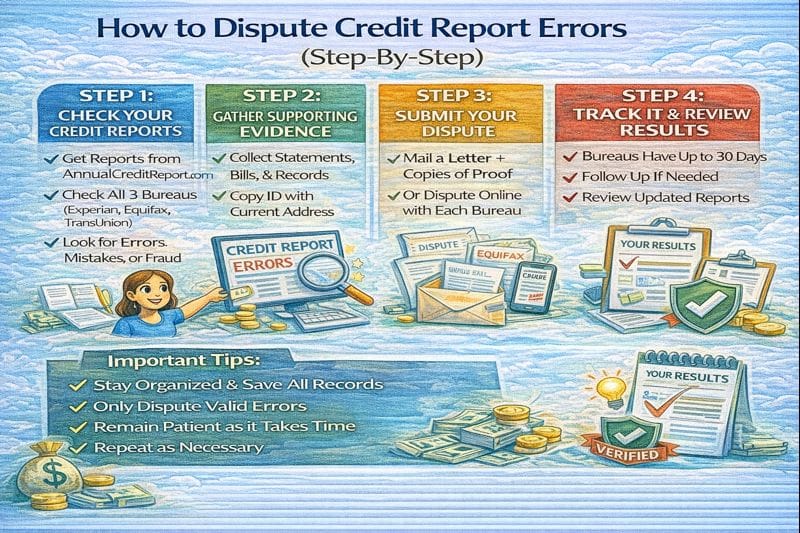
Security measures have actually also advanced. Two-factor authentication is no longer enough; lots of banks now use AI to verify identity through voice patterns or typing rhythms. While this includes a layer of protection, it likewise implies consumers must be more alert than ever. Frequently inspecting credit reports for mistakes is still a fundamental responsibility. If an AI model is fed inaccurate information, it will produce an inaccurate score, and fixing those mistakes in an automated system can sometimes need the support of a professional therapist who understands the conflict process in 2026.
The shift towards AI in credit history is not simply a technical modification; it represents a new way of thinking about trust and danger. By focusing on behavioral consistency rather than simply historical financial obligation, the 2026 monetary system provides a more nuanced view of the individual. For those who stay notified and use the tools readily available to them, this brand-new period supplies more pathways to financial stability than ever in the past.

Latest Posts
Top Tips for Handling Credit Card Debt in 2026
Why Your Credit Report Looks Different in Your City
Discovering Inexpensive Consolidation Solutions in Your Local Area